2026 Chevy Suburban EV vs Gas – Power and Range Compared – The full-size SUV segment is evolving faster than ever, and the 2026 Chevy Suburban stands at the forefront of this shift. As families and adventure seekers demand more from their vehicles—space for nine, towing prowess, and now, sustainable options—Chevrolet is delivering with both time-tested gas engines and a bold new electric powertrain. Whether you’re hauling a trailer across state lines or shuttling kids to soccer practice, the choice between the gas and EV versions boils down to power and range. In this comparison, we’ll break down how these titans stack up, helping you decide which fits your drive. With the EV’s instant torque and the gas model’s legendary endurance, 2026 promises thrilling options for every road warrior.
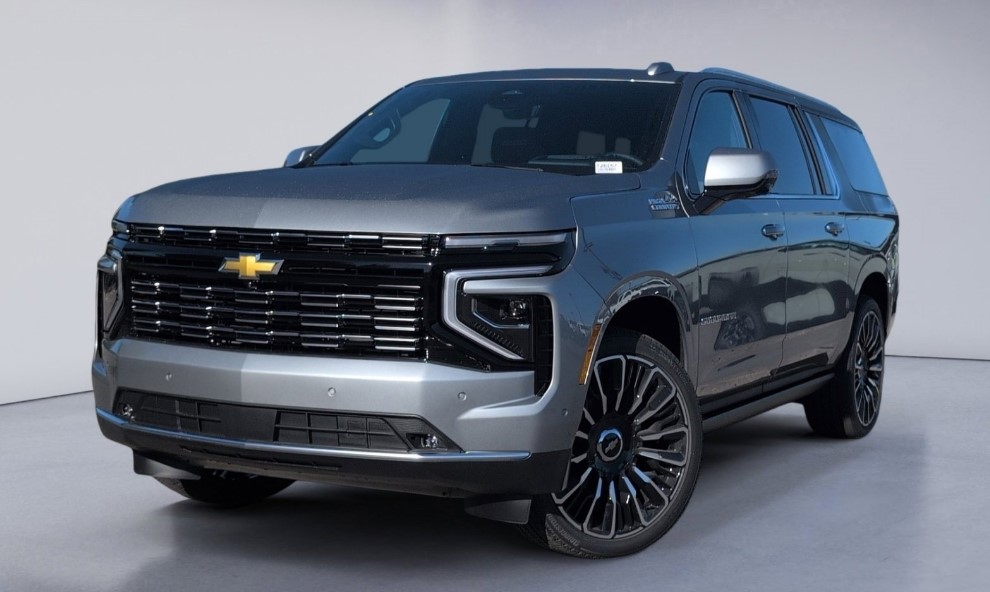
Overview of the 2026 Chevy Suburban Lineup
The 2026 Chevy Suburban remains Chevrolet’s flagship for uncompromised space and capability, boasting up to 144.5 cubic feet of cargo room and seating for up to nine. But under the hood (or battery pack), the differences are stark. The gas models build on decades of refinement, while the EV introduces Ultium-based tech for zero-emission cruising.
The Gas-Powered Models: Proven Muscle
Stick with tradition, and you’ll find three robust engine choices paired with a smooth 10-speed automatic transmission. These are available in rear-wheel or four-wheel drive, with trims from LS to High Country starting around $63,400.
- 5.3L EcoTec3 V8: The base engine pumps out 355 horsepower and 383 lb-ft of torque. It’s ideal for everyday hauls, with Dynamic Fuel Management for efficiency.
- 6.2L EcoTec3 V8: Upgrade for 420 horsepower and 460 lb-ft of torque, exclusive to High Country but optional on select trims. This beast shines for spirited drives.
- 3.0L Duramax Turbo-Diesel: A torque monster at 305 horsepower and a class-leading 495 lb-ft, perfect for long hauls with up to 728 miles of highway range on a 28-gallon tank.
Real-world tip: If you’re towing frequently, opt for the diesel—its low-end grunt makes launching a 7,500-pound trailer feel effortless, unlike the V8’s higher-rev peak.
The All-New Electric Variant: Silent Thunder
Debuting for 2026, the Suburban EV rides on GM’s Ultium platform, stretching to an even longer wheelbase for enhanced interior room. Expect a starting price near $80,000, with dual-motor all-wheel drive as standard. While official EPA figures are pending, early estimates draw from the Silverado EV’s architecture.
Powered by a massive 200+ kWh battery, it delivers jaw-dropping 760 horsepower and 785 lb-ft of torque in its top tune—enough to eclipse the gas models’ output. Acceleration? Think 0-60 mph in under 5 seconds, even loaded. But it’s the seamless one-pedal driving that wins over enthusiasts, blending luxury with zero tailpipe emissions.
Pro insight: The EV’s regenerative braking isn’t just efficient; it recaptures energy on descents, extending range during mountain trips where gas models guzzle fuel.

Power Comparison: Horsepower, Torque, and Acceleration
Power is where the 2026 Chevy Suburban EV flexes its modern edge, offering instant delivery that gas engines can’t match. Torque—the real-world feel of pull—tips heavily toward the EV for quick merges or off-road climbs. Here’s a side-by-side:
| Feature | Gas 5.3L V8 | Gas 6.2L V8 | Gas 3.0L Diesel | EV Dual-Motor AWD |
|---|---|---|---|---|
| Horsepower | 355 hp | 420 hp | 305 hp | 760 hp |
| Torque | 383 lb-ft | 460 lb-ft | 495 lb-ft | 785 lb-ft |
| 0-60 mph (est.) | 7.2 seconds | 6.0 seconds | 8.0 seconds | 4.8 seconds |
| Top Speed | 113 mph (limited) | 113 mph (limited) | 113 mph (limited) | 120 mph (limited) |
The EV’s dual motors provide all-wheel torque vectoring, making it nimbler than its 6,000+ pound curb weight suggests. For enthusiasts, this means playful handling on twisty roads—imagine carving corners with no engine roar, just electric hum. Gas fans, however, appreciate the V8’s throaty soundtrack; pair it with the optional performance exhaust for that classic American rumble.
Example: On a family road trip, the EV’s surge off the line at stoplights will thrill passengers, while the diesel’s steady torque keeps vibes low during 70-mph cruises.
Range and Efficiency: How Far Can You Go?
Range anxiety? Not here. The gas Suburban excels in total distance per fill-up, but the EV prioritizes per-charge efficiency with home charging convenience. All models share a 28-gallon equivalent capacity, but real-world factors like towing or weather play big roles.
Gas Efficiency Breakdown
- 5.3L V8: 15 mpg city / 20 mpg highway (EPA est.), ~560 miles total range.
- 6.2L V8: 14 mpg city / 19 mpg highway, ~532 miles total.
- 3.0L Diesel: 21 mpg city / 26 mpg highway, up to 728 miles highway—the segment benchmark for non-stop adventures.
Tip: Track your MPG with the Suburban’s driver info display; highway driving at 65 mph can squeeze an extra 50 miles from the diesel tank.
EV Range Insights
Estimated at 440 miles EPA (front-drive bias for max efficiency), the Suburban EV outpaces most rivals but trails gas on ultra-long trips. Fast DC charging adds 100 miles in 10 minutes via 350 kW capability. Cold weather might dip range 20-30%, but preconditioning via the app mitigates this.
Practical advice: For daily commuters, the EV’s 3-4 miles per kWh efficiency means $0.10/mile costs (at $0.15/kWh home rates) versus $0.25/mile for gas at $4/gallon. Plan routes with Electrify America stations for peace of mind.
In a quick list for cross-country hauls:
- Gas diesel: Refuel in 5 minutes, go 700+ miles.
- EV: Charge in 30 minutes for 200 miles, but plan ahead.
- Hybrid? Not yet, but watch for future plug-in options.

Performance in Real-World Scenarios
Beyond specs, how do they drive? The gas Suburban feels planted and familiar, with Magnetic Ride Control damping bumps on family errands. Tow up to 8,300 pounds with confidence—the V8’s bandwidth handles it without strain.
The EV transforms the experience: Silent cabin for podcasts, adaptive air suspension for buttery rides, and bidirectional charging to power a tailgate party. Off-road? The Z71 EV trim (rumored) adds virtual differentials for low-traction mastery. But towing drops range 50%, so gas wins for heavy-duty jobs.
Enthusiast note: Test the EV’s “Extract Mode” (borrowed from Silverado EV)—it unlocks max power for 2 minutes, perfect for overtaking semis.
Cost Considerations: Upfront and Long-Term
Gas models start lower ($63K+), but EVs qualify for up to $7,500 federal tax credits, narrowing the gap. Over 5 years/75,000 miles, the EV could save $5,000 in fuel, plus lower maintenance (no oil changes). Resale? EVs are rising, but gas holds steady for fleets.
Insight: Calculate your annual miles—if over 15,000, the EV’s savings compound quickly.
Technology and Features Across Both
Both share Chevy’s suite: 17.7-inch touchscreen, Super Cruise hands-free driving, and 14-camera views. The EV adds over-the-air updates and a 15-inch head-up display tuned for energy flow. Safety? Identical Chevy Safety Assist, from blind-spot alerts to adaptive cruise.
Wrapping Up: Which Suburban Powers Your Journey?
The 2026 Chevy Suburban EV redefines power with electric immediacy and solid range for modern explorers, while gas versions deliver unbeatable endurance for traditionalists. If zero emissions and torque thrill you, go EV. For marathon range without plugs, the diesel reigns. Either way, the Suburban’s space and smarts make it a segment king.
Key Comparison Summary
| Category | Gas (Diesel) Highlight | EV Highlight |
|---|---|---|
| Power | 305 hp / 495 lb-ft | 760 hp / 785 lb-ft |
| Range | Up to 728 miles per tank | Up to 440 miles per charge |
| 0-60 mph | 8.0 seconds | 4.8 seconds |
| Efficiency | 21/26 mpg city/hwy | 3-4 mi/kWh; $0.10/mile est. |
| Towing Max | 8,300 lbs | 10,000 lbs (est.) |
| Starting Price | $63,400 | $80,000 (est.) |
Choose based on your miles, charging access, and vibe—the future of full-size SUVs is electrifyingly versatile.